What is game based learning?
Game based learning is a way of teaching multi, cross curricular subjects. They help to create a context for the activity you are doing in the primary classroom. The games help to create meaningful contexts which help to engage and motivate learners. Games create an environment where children are given the opportunity to draw on experiences and help visual the context in which they are learning (Scottish Government, 2009).
Game based learning is becoming more popular in schools and I am becoming more interested in using computer games as a learning tool. However, I understand that games based learning is NOT about teaching ICT, it is about an entire context which is to be applied across the whole curriculum and used as a resource to enhance learning.
Prensky, 2002 is confident that games are beneficial and that we should appreciate and experiment with games in the classroom. He states:
‘As we come to better understand and be less afraid of the incredible hold computer and video games have on our children, and harness it instead to the curriculum and other positive uses, computer and video games will, I predict, be our salvation in the learning area.’
Throughout game based learning children not only feel motivate and encouraged to succeed in the game, but they also help develop learners to observe, question, and develop problem solving skills.
In relation to game based learning, this week we had visitors from a local primary school come to the university. We were using computer games as a context for learning. My group decided on Mario Kart. We prepared activities relating with maths and also design and technology.

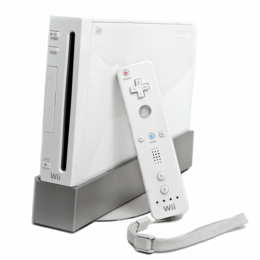
We set up our game using the Nintendo WII console which most of the children has experience playing. The children were very knowledgeable with the game and knew more about it than we did. This was good because the children were familiar with the game already and had previous experiences playing it.
Once the children had experienced playing the game, we set up an activity which involved them creating and designing their own car. We informed them of the activity before playing the game to give them the opportunity to get ideas from the card on Mario Kart. The children used computers to create their car, using ‘Purple Mash’ on Glow. Children have access to this programme in school and also at home – They seemed interested in the software which suggests they would want to access this elsewhere.

The software allowed the children to design a car using shapes, patterns and lines. They could also see the net of their car which they had to design. This involved them working out what each part of the 3D car was n the form of a net. Once the children were finished, they would print off their net, colour and design, and finally cut out and fold to create their 3D car!
 The ‘purple mash’ programme met the outcomes of curriculum for excellence and we were also able to relate it to some of the principles. The programme is enjoyable for the children and also contains an appropriate level of challenge, to enable each individual to achieve their potential. The more capable pupils could use more detailed designs, interesting shapes which will alter the net and challenge the children’s thinking (Scottish Government, 2009). The children also have the choice of how to design their car. It is a personal creation where the children can use their imagination. I liked how every car was different and special in different ways. Furthermore, the software provides the opportunities for a broad, suitably weighted range of experiences where the children are learning and developing through a game based context (Scottish Government, 2009).
Tutorual - How to use '2 Design and Make' - Purple Mash
In my opinion, through observations and written feedback from the children, they were engaged, motivated and excited with the game. We asked the children if the game inspired them when designing their car and they said it ‘gave them ideas on shape and designs’. The children also commented that they liked how if you make a mistake using ICT, you learn from it and know not to do it next time.
We created 3 posters to get feedback from the children:
What did I learn?
‘How to design a 3D car’
‘Glow isn’t all about messaging’
‘How to make a net using purple mash’
-The children learned about nets, designing cars, how to play the game and they also learned about ‘Glow’ and other ways it can be used.
The game also enhanced hand eye coordination as well as using a steering wheel to steer the cars.
What could have been better?
‘A little more time’
‘longer to play the game’
-These comments were obvious to us, however in class the children would have more time than we did.
What did you like?
‘I liked that we got a lot of help, and making the cars’
I liked making cars and decorating them’
‘I liked that you can design your own car’
-The children liked the activities, more that the game, this surprised me but also suggests that the children also realise that the game is the context, not the learning.
To help develop my professional practice further in relation to game based learning I need to think about how I would manage the class in these situations. Would the game put others off their work? Should it be hidden from the rest of the class while they are working? I think game based learning would be an excellent way of setting a context for learning and I would love to experience managing and teaching a class of children through the game based approach.
References

No comments:
Post a Comment